
Trade Regimes
The Republic of Belarus uses three types of trade regimes in the trade and economic relations with other countries.
— Free Trade Regime / Free Trade Zone
The free trade regime is one of the most effective forms of international economic integration. The establishment of free trade regime is carried out on a contractual basis between the states having a rather high level of trade, economic and political cooperation.
The free trade regime provides for the abolishment of customs tariffs and quantitative restrictions in bilateral trade. Extra sensitive products are exempted from the free trade regime.
The Republic of Belarus has signed bilateral agreements on free trade with Armenia, Azerbaijan, Kazakhstan, Kyrgyzstan, Moldova, Russia, Serbia, Tajikistan, Turkmenistan,Ukraine, Uzbekistan.
On October 18, 2011 Armenia, Belarus, Kazakhstan, Kyrgyzstan, Moldova, Russia, Tajikistan and Ukraine signed the CIS Treaty on Free Trade Area. Uzbekistan joined the Treaty separately.
The Republic of Belarus is also a Party to the CIS Agreement on Establishment of a Free Trade Area signed on April 15, 1994 (with amendments of April 2, 1999). The Agreement is applied in relations with the Member States for which the CIS Treaty on Free Trade Area of October 18, 2011, did not enter into force, in particular, with Azerbaijan.
Moreover, the Republic of Belarus and Georgia, through an exchange of notes between the foreign ministries, agreed to apply in mutual trade the Agreement on the Establishment of a Free Trade Zone dated April 15, 1994, after Georgia’s withdrawal from the CIS.
The successful implementation of the Eurasian economic integration stimulates foreign countries to cooperate with Belarus and the Eurasian Economic Union in general.
In accordance with Article 35 of the EAEU Treaty of May 29, 2014, the free trade regime with the third party is established on the basis of an international treaty of the Union with this third party.
On May 29, 2015 after three years of negotiations the Free Trade Agreement between the Eurasian Economic Union and its Member States, of the one part, and the Socialist Republic of Viet Nam, of the other part, was signed. The Agreement entered into force on October 5, 2016, and provides for significant reduction or abolishment of import duties on almost all key positions of Belarusian exports to Vietnam.
On October 25, 2019 the Agreement on Economic and Trade cooperation between the Eurasian Economic Union and its Member States, of the one part, and the People's Republic of China, of the one part, and on October 27, 2019 the Interim Agreement leading to formation of a free trade area between the EAEU and its Member States, of the one part, and the Islamic Republic of Iran, of the other part, have entered into force. The Agreements were signed on May 17, 2018 during the Astana Economic Forum.
In 2023, a full-fledged Free Trade Agreement between the Eurasian Economic Union and its Member States, of the one part, and the Islamic Republic of Iran, of the other part, was signed. It is expected that the conclusion of the Agreement will facilitate trade conditions and customs procedures due to the mutual elimination of duties on almost 90 percent of commodity items, increase trade turnover and intensify cooperative ties and investment cooperation.
The Protocol on the extension of the Interim Agreement with Iran was signed on March 14, 2022 for the “inseparability” of the preferential trade regime. Under the Protocol, the duration of the Interim Agreement has been extended until October 27, 2025, or until the free trade agreement stipulated in the Interim Agreement becomes effective, whichever happens first. The Protocol entered into force on October 25, 2022 after ratification.
In 2019, the EAEU Member States completed negotiations on conclusion of the free trade agreements with Singapore and Serbia. The Free Trade Agreement between the Eurasian Economic Union and its Member States, of the one part, and the Republic of Serbia, of the other part, entered into force on July 10, 2021. The Agreement with Singapore is expected to enter into force after the completion of ratification procedures by all the EAEU Member States.
In 2023, negotiations on concluding free trade agreements in goods with the United Arab Emirates and Indonesia were launched and have been actively progressing since then. Negotiations on concluding FTA with Egypt are also under way.
— Most-Favoured-Nation Treatment (MFN)
The Most-Favoured-Nation Treatment is established by international agreements under which each party shall provide to other party with no less favorable conditions than it provides or will provide in the future to any third state in the field of economic, trade and other relations. The MFN is exercised on a reciprocal basis through the conclusion of multi- and bilateral international treaties. In trade with foreign countries the EAEU Member States apply customs rates established by the EAEU Common Customs Tariff.
— Preferential Treatment (System of Preferences)
The detailed information is available in the section “Tariff Regulation”.

Выступление Министра М.Рыженкова на открытых дебатах Совета Безопасности ООН // Statement by Minister M.Ryzhenkov at the open debate of the UN Security Council

Belarusian Vytsinanka has been inscribed on the UNESCO Representative List of Intangible Cultural Heritage
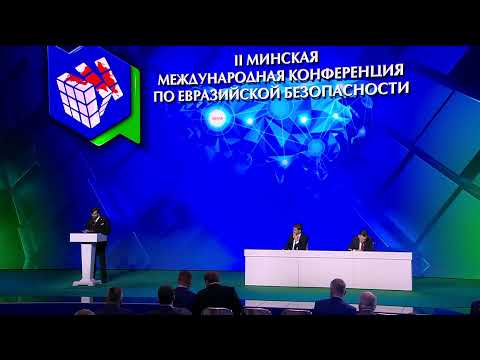
II Minsk International Conference on Eurasian Security

2023 in the history of Belarusian diplomacy
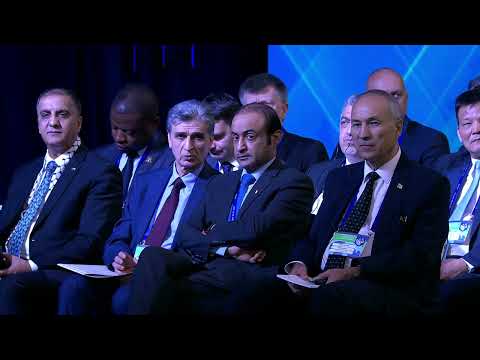
High-level International Conference on Eurasian Security
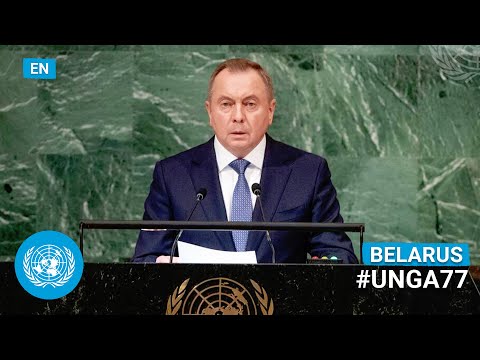
Statement by Foreign Minister Vladimir Makei at the 77th session of the UN General Assembly (September, 2022)


Official Internet Resources
President of the Republic of Belarus
www.president.gov.byCouncil of Ministers of the Republic of Belarus
www.government.gov.byCouncil of the Republic
www.sovrep.gov.byHouse of Representatives
www.house.gov.byNational Agency of Investment and Privatization
www.investinbelarus.byInternational ICT Forum TIBO
www.tibo.byNational Center of Legislation and Legal Information
www.center.gov.byNational Tourism Agency
www.belarustourism.byInformation export support website Export.by
www.export.byBelarusian Universal Commodity Exchange
www.butb.byBelarusian Chamber of Commerce and Industry
www.cci.byOfficial website of the Republic od Belarus
www.belarus.byBelarus TV
www.news.byRadio Belarus International
www.radiobelarus.byDipservice
www.dipservice.byBusiness network TradeBel
www.tradebel.comNational Academy of Science of Belarus
www.nasb.gov.byMinistry of Education of the Republic of Belarus
www.edu.gov.byMinistry of Natural Resources of the Republic of Belarus
www.minpriroda.gov.byMinistry of Health of the Republic of Belarus
www.minzdrav.gov.byMinistry of Economy of the Republic of Belarus
www.economy.gov.by