
Eurasian Economic Union
The Eurasian Economic Union (EAEU) is an international organization of regional economic integration with international legal personality.
The Agreement on the Eurasian Economic Union was signed by the presidents of the Republic of Belarus, the Republic of Kazakhstan and the Russian Federation on May 29, 2014. This Agreement came into force on January 1, 2015.
The Union membership is open for any state, which shares the goals and principles of the EAEU, on the terms agreed by Member States. The Republic of Armenia became a member of the Union on January 2, 2015, and the Kyrgyz Republic on August 12, 2015.
Any interested state is provided with the possibility to get the Observer State status. Currently, the observer states of the EAEU are Cuba, Moldova and Uzbekistan.
The Agreement on the EAEU defines the main areas of cooperation within the EAEU, as well as the competence, the procedure for formation and operation of the bodies of the Union, which are the Supreme Eurasian Economic Council, the Eurasian Intergovernmental Council, the Eurasian Economic Commission (the Union’s permanent regulatory body) and the Court of the EAEU.
There are established principles: all important decisions are made by consensus and all the parties are represented equally in the management of permanent structures.
On January 1, 2018, the EAEU Customs Code entered into force. It simplified customs procedures, established the priority of the electronic form of documents submission and integrated the mechanism “single window”. Thanks to the code, the time required for the release of goods for free circulation has been reduced dramatically.
In December 2020, the heads of state of the EAEU signed a system-forming strategic planning document for the next 5 years – Strategic Directions for Developing the Eurasian Economic Integration until 2025.
The Strategy-2025 sets the following main objectives: complete formation of the common market for goods, services, capital and labor; improved efficiency of regulating the EAEU common market; transfer to a qualitatively higher level of customs regulation and administration, etc. It also determines the international activities of the Union aimed at further developing economic cooperation with third countries, regional integration associations and international organizations.
On December 25, 2023, the heads of state of the EAEU signed the Declaration on the further development of economic processes within the EAEU until 2030 and for the period up to 2045 “The Eurasian Economic Path”. The Declaration defines the tasks of the Union for the medium term until 2030 on the way to turning the EAEU by 2045 “into a self-sufficient, harmoniously developed and attractive macro-region for all countries of the world, possessing economic, technological and intellectual leadership and maintaining a high level of well-being of the population of the member states.”
The international activities of the Union are aimed at promoting the sustainable economic development of member states, diversification of economies, innovative development, increasing the volume and improving the structure of trade and investment, accelerating integration processes, as well as the further development of the Union as an effective and competitive organization within the global economy.
The EAEU international activities will focus on intensifying the interaction with the CIS states and other neighboring countries, cooperation with observer states, developing a systematic dialogue with the Shanghai Cooperation Organization (SCO), the Association of Southeast Asian Nations (ASEAN), the BRICS countries and other interested states and associations in Central Asia and the Middle East in the context of the idea of the Greater Eurasian Partnership, promoting the realization of the EAEU countries' export potential.
The Eurasian Economic Commission concluded more than 45 memoranda with international organizations and about 50 documents, including trade agreements, with governments, ministries and departments of third countries, as well as regional integration associations and interstate associations.
The Free Trade Agreement between the EAEU and Vietnam has been implemented since 2016. The Agreement on Trade and Economic Cooperation between the EAEU and China has been in effect since 2019. On October 1, 2019 the first agreements from the package of a comprehensive trade deal between the EAEU and its Member States and Singapore were signed; on October 25, 2019 the free trade agreement with Serbia was concluded. As a follow-up to the Interim Agreement leading to formation of a free trade area between the EAEU and Iran (came into force in 2019), in December 2023, a full-fledged free trade agreement between the Union and Iran was concluded. The EAEU also holds negotiations on creation of FTAs with Egypt, the UAE and Indonesia.
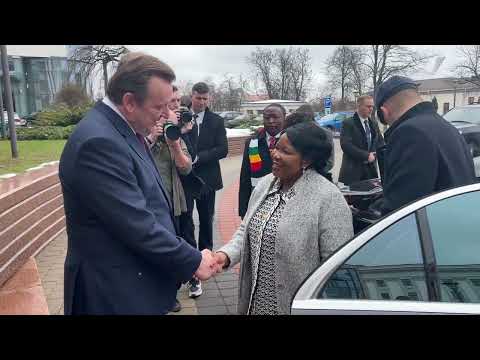
2023 in the history of Belarusian diplomacy
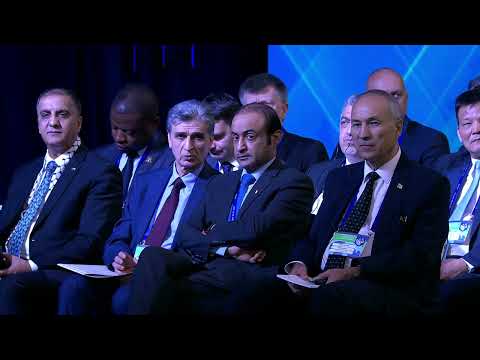
High-level International Conference on Eurasian Security
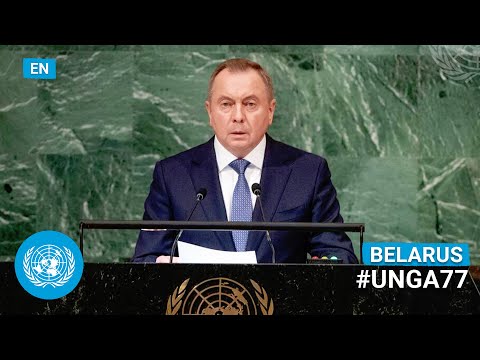
Statement by Foreign Minister Vladimir Makei at the 77th session of the UN General Assembly (September, 2022)
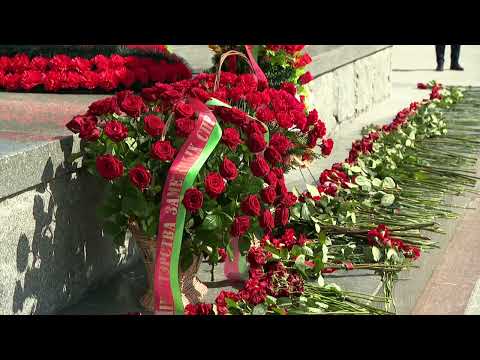
77 лет Победы // Victory Day. 77th Anniversary (2022)

Интервью Министра В.Макея китайскому телеканалу CGTN // FM Vladimir Makei gives an interview to CGTN

Visa-free travel to Belarus


Official Internet Resources
President of the Republic of Belarus
www.president.gov.byCouncil of Ministers of the Republic of Belarus
www.government.gov.byCouncil of the Republic
www.sovrep.gov.byHouse of Representatives
www.house.gov.byNational Agency of Investment and Privatization
www.investinbelarus.byInternational ICT Forum TIBO 2022
www.tibo.byNational Center of Legal Information
www.ncpi.gov.byNational Tourism Agency
www.belarustourism.byInformation export support website Export.by
www.export.byBelarusian Universal Commodity Exchange
www.butb.byBelarusian Chamber of Commerce and Industry
www.cci.byOfficial website of the Republic od Belarus
www.belarus.byBelarus TV
www.tvr.byRadio Belarus International
www.radiobelarus.byDipservice
www.dipservice.byBusiness network TradeBel
www.tradebel.comNational Academy of Science of Belarus
www.nasb.gov.byMinistry of Education of the Republic of Belarus
www.edu.gov.byMinistry of Natural Resources of the Republic of Belarus
www.minpriroda.gov.byMinistry of Health of the Republic of Belarus
www.minzdrav.gov.byMinistry of Economy of the Republic of Belarus
www.economy.gov.by