Interview by First Deputy Minister of Foreign Affairs of Belarus S.Lukashevich for India's The Economic Times (15 May 2026, Delhi)
What are Belarus expectations from BRICS foreign ministers meeting?
Today’s global challenges require collective solutions and a revitalized international system. There is an urgent need not only to strengthen our internal capacity but also to adopt a truly multilateral approach to international affairs. In these circumstances it seems reasonable to use a mechanism of interaction that would open up new avenues for expanded cooperation.
Belarus sees the practical embodiment of these ideas in BRICS. In the current geopolitical context, BRICS stays a reputable international platform aimed at uniting the efforts of the large group of states known as the Global South, or the Global Majority, and fostering genuine multipolarity, equality, mutual respect, and inclusiveness in international relations.
Therefore, Belarus’s acquisition of the new status of a BRICS partner state in 2024 was a significant and milestone event for us. Nevertheless, our immediate priority is joining BRICS as a full member as soon as the association is ready for expansion. We share a common view of the world order with the Global Majority, and adhere to unified approaches. Today, when outdated unipolar mechanisms are demonstrating their ineffectiveness and politicization, the role of BRICS as a pillar of a multipolar world, and an integral part of a just world order is becoming critically important.
As a BRICS partner state, we strive to actively engage in the work of existing multilateral mechanisms of the association within the «BRICS+» format. The Meeting of BRICS Ministers of Foreign Affairs is not an exception. This event provides a wonderful platform for deliberating on global and regional issues, and deepening cooperation within the BRICS framework.
We believe that strengthening interaction in politics and security is a necessary condition for building a fair multipolar system of international relations. In addition, our activities in BRICS are aimed at sustainable economic development to preserve and enhance human potential, ensure high social standards and a decent quality of life, introduce innovations and the latest technologies.
Moreover, the BRICS countries, their friends and partners have an opportunity to become a new economic force, as the potential of BRICS is enormous – from combating the fragmentation of the multilateral trading system to developing its own mechanism for mutual settlements that minimize the risks of external pressure and global crises, from ensuring global food security to establishing unified rules for the development and use of AI.
Belarus expects to join the BRICS financial institution – the New Development Bank – and to focus on creating qualitative conditions for the development of trade and investment cooperation, developing new secure financial settlement mechanisms and implementing investment projects in the BRICS space.
Of course, our interests and ambitions are much broader. We are ready for comprehensive cooperation within BRICS and call for the active involvement of partner states in the activities of the group. Belarus views BRICS not just as an association, bur as a strategic platform for the future. Its members face ambitious tasks that require coordinated efforts. Belarus is eager to take an active part in this important work.
What is the current state of Indian-Belarusian relations, and how can they be improved?
Relations between our countries, ever since the Soviet era, have been characterized as close, warm, and open. Indian culture, its unique spiritual traditions, and historical heritage have always aroused genuine interest among Belarusians.
Next year will mark 35 years since the establishment of diplomatic relations between our countries. We approach this anniversary with a steady dynamic of contacts in all areas – from trade and industry to humanitarian ties and multilateral diplomacy.
Both countries confirm their commitment to elevating cooperation to a qualitatively new level, reflected in regular political contacts and growing economic activity, including in fundamentally new areas.
At the end of October 2025, the 8th round of consultations between the Ministries of Foreign Affairs of our countries took place, covering the entire spectrum of relations – from politics and economics to assembly plants and cultural ties. The new Indian Ambassador to Minsk, Mr. Ashok Kumar, is a very active diplomat; together with our Ambassador in New Delhi, Mr. Mikhail Kasko, they are constantly proposing new solutions to strengthen our relations.
The next meeting of the Intergovernmental Commission on Cooperation in Economics, Trade, Industry, Science, Technology, and Culture between our countries is scheduled for the end of May 2026. We look forward to the visit of Jitin Prasada, Minister of State for Commerce and Industry and Minister of State for Electronics and Information Technology, to Belarus to participate in this event. India's importance to us is also underscored by the high status of our head of this Commission, the Foreign Minister Maxim Ryzhenkov.
As part of this event, a bilateral business forum is planned, as well as the signing of a number of important policy documents for the years to come.
For two years now, the Belarusian airline Belavia has been operating a direct flight between Minsk and Delhi, which not only promotes tourism but also fosters business cooperation between the two countries. We also encourage Indian airlines to consider the capabilities of Belarusian airports, both in terms of passenger services and cargo terminals.
What are the priority areas of partnership?
Over the past 10 years, the range of areas of cooperation between Belarus and India has significantly expanded. This is confirmed by the fact that by the end of 2025, the total turnover of goods and services between our countries exceeded $1 billion for the first time in history.
A key area of the joint work is agriculture. Our country is one of the world leaders in the mineral fertilizer market, and potash fertilizer supplies from Belarus are strategically important for the Indian agricultural sector and food security.
We are interested in purchasing Indian agricultural products, including spices and tea, which are so popular here.
Overall, in recent years, the growth of Indian exports to Belarus has been driven by important, and sometimes critical, products such as pharmaceuticals, mechanical engineering, chemicals, and textiles.
Based on the mutual interest of our business communities, we are also exploring new areas of cooperation. One such area is seafood trade and processing. This topic was discussed during a visit to Minsk this week by a representative delegation of major Indian companies.
Our countries are currently working on transition from supplying India with fully assembled, complex products – trucks, tractors, buses, and other items – to establishing joint ventures as part of the Indian government's policy of mass production of import-substituting industries. In this context, efforts have intensified to establish joint assembly and localized manufacturing facilities to establish cooperation under the "Make in India" industrialization program and the "Smart Cities" urban development program. And our country truly has much to offer.
The Indian Government has set an ambitious goal of completely converting urban public transport to environmentally friendly electric traction by 2030. The Republic of Belarus can also make a significant contribution to the transformation of public transport in the country and reducing its environmental impact. Electric transport has been actively used in Belarus for over 20 years. For example, in 2025, 50% of public transport in our capital, Minsk, consisted of electric vehicles. We are ready to share our experience and technologies in this important area.
Investment opportunities from Indian companies, particularly India's robust pharmaceutical sector, remain significant for the Belarusian economy. Three major investment projects involving Indian capital and pharmaceutical technologies have already been implemented in Belarus. Assistance is being provided for the implementation of new major projects, leveraging Indian expertise and investment.
When you look at Belarus, its unique geographical location in the center of Europe and its well-developed logistics infrastructure are undeniable. Key trade routes from Asia to Europe pass through our country. Belarus is poised to become a transport hub for India's products destined for Europe and Russia.
We have an extensive experience collaborating in education. Currently, approximately 1,000 Indian students are studying at Belarusian universities. All of these young professionals defend their diplomas in India upon graduation. This is a small number for India, which is why we are currently actively working on the mutual recognition of higher education diplomas.
Last year, at the invitation of our President Alexander Lukashenko, two dozen children from India vacationed in Belarus. This July, we again welcome Indian children to our country's picturesque holiday destinations. This humanitarian initiative of our President is being implemented entirely with Belarusian funding.
Cultural exchanges remain an important part of our relations. Indian cinema enjoys immense popularity in Belarus. I am pleased to note that Belarus' leading film studio, Belarusfilm, is already actively collaborating with Indian companies. Indian directors are increasingly visiting Belarus to shoot films and music videos for Bollywood. The participation of Indian competitors at the Listapad International Film Festival in Minsk has become a fine tradition.
I would like to note that many women in Belarus practice yoga: from classical hatha to ashtanga and yoga therapy.
Regional contacts are developing. 40 years ago, a sister city agreement was signed between the Belarusian capital, Minsk, and the Indian city of Bangalore. Cooperation agreements between the Belarusian regions and the states of Maharashtra, Gujarat, and others are in the pipeline.
The Belarusian Consulate General in Mumbai has been successfully operating for several years now, providing another diplomatic hub that is actively developing relations between our countries. We are also working to accredit new Belarusian honorary consuls in Indian regions, which will contribute to the further effective rapprochement between our countries.
Thus, the current dynamics and quality of relations between our countries, along with positive examples of cooperation in virtually all areas, demonstrate a strong mutual interest in further developing cooperation.
How can India-EAEU FTA help India’s presence in Eurasia?
We witness the deepening of global contradictions and the weakening of the Western-centric model of global development. In these circumstances the role and influence of regional organizations uniting the states on the principles of equality, respect for mutual interests, non-interference in internal affairs, and indivisible security, are growing. I am confident that India shares these approaches.
Belarus, as the founder-country of the Eurasian Economic Union, is interested in expanding the circle of partners and leveraging their potential to implement mutually beneficial projects.
We welcome the activization of work on the draft Free Trade Agreement between the EAEU and India. Successful signing of this ambitious FTA will result in facilitating export/import procedures between partners, reducing or eliminating tariffs on an agreed number of items traded between EAEU and India, and finally in growing turnover. Not only exporters and importers from both sides but, eventually, our citizens will benefit from FTA.
We hope for the speedy achievement of agreements on mutual trade liberalization, which will facilitate the growth of the Belarusian-Indian ties, too.

Выступление Министра М.Рыженкова на открытых дебатах Совета Безопасности ООН // Statement by Minister M.Ryzhenkov at the open debate of the UN Security Council
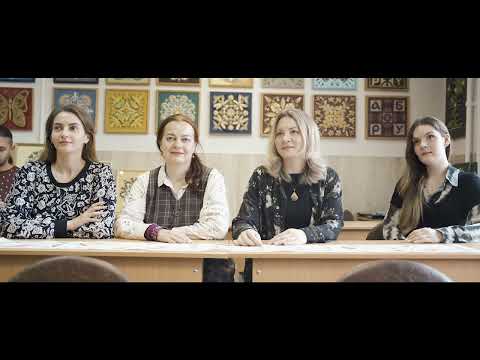
Belarusian Vytsinanka has been inscribed on the UNESCO Representative List of Intangible Cultural Heritage
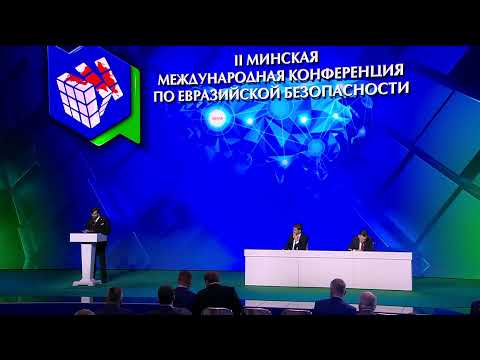
II Minsk International Conference on Eurasian Security
2023 in the history of Belarusian diplomacy
High-level International Conference on Eurasian Security
Statement by Foreign Minister Vladimir Makei at the 77th session of the UN General Assembly (September, 2022)


Official Internet Resources
President of the Republic of Belarus
www.president.gov.byCouncil of Ministers of the Republic of Belarus
www.government.gov.byCouncil of the Republic
www.sovrep.gov.byHouse of Representatives
www.house.gov.byNational Agency of Investment and Privatization
www.investinbelarus.byInternational ICT Forum TIBO
www.tibo.byNational Center of Legislation and Legal Information
www.center.gov.byNational Tourism Agency
www.belarustourism.byInformation export support website Export.by
www.export.byBelarusian Universal Commodity Exchange
www.butb.byBelarusian Chamber of Commerce and Industry
www.cci.byOfficial website of the Republic od Belarus
www.belarus.byBelarus TV
www.news.byRadio Belarus International
www.radiobelarus.byDipservice
www.dipservice.byBusiness network TradeBel
www.tradebel.comNational Academy of Science of Belarus
www.nasb.gov.byMinistry of Education of the Republic of Belarus
www.edu.gov.byMinistry of Natural Resources of the Republic of Belarus
www.minpriroda.gov.byMinistry of Health of the Republic of Belarus
www.minzdrav.gov.byMinistry of Economy of the Republic of Belarus
www.economy.gov.by